More Than a Diagnosis: A Día de los Muertos Craft for Exploring Identity
What if a craft could help a child answer one of life’s biggest questions:
Who am I, and what do I want to be remembered for?
For families who celebrate or are learning about Día de los Muertos, an ofrenda is a meaningful way to remember the people who have shaped us. Photographs, flowers, favorite foods, and treasured objects tell the story of a person’s life.
This year, consider turning that idea into a creative identity activity: invite your child to make a small coffin-shaped box or personal ofrenda for themselves.
The goal isn’t to focus on death. It is to invite children to think about life, identity, culture, values, and the person they want to become.
Start With the Craft
A small cardboard box, shoebox, or pieces of cardboard can become the foundation. With an adult’s help, children can create a simple coffin shape and then decorate it with markers, paint, colorful paper, flowers, photographs, ribbons, drawings, or anything that represents who they are.
Let the child decide.
Perhaps they include family photographs, a favorite food, a soccer ball, musical notes, animals, books, or symbols of their interests. They might incorporate elements of their Hispanic heritage—flowers, papel picado-inspired designs, Spanish words, traditional foods, or family traditions.
The choices are the conversation.
What Goes Inside?
Ask your child:
“If people were telling stories about you many years from now, what would you want them to say?”
Maybe they want to be remembered as kind, funny, creative, brave, generous, or someone who made others feel included.
Then ask:
- What are you proud of?
- Who has helped make you who you are?
- What parts of our family or culture do you want to carry forward?
- What makes you uniquely you?
- What do you hope to give to others?
A child who has difficulty talking about themselves may find it easier to answer through objects, pictures, and symbols.
More Than a Diagnosis
This activity can be particularly meaningful for neurodivergent children.
A diagnosis can provide valuable understanding and access to support. But a diagnosis is not the whole child.
Neurodivergence can bring real challenges, and children deserve accommodations, advocacy, and support. At the same time, their different ways of thinking, noticing, creating, communicating, and experiencing the world can be meaningful parts of who they are.
The personal ofrenda gives children an opportunity to tell a larger story.
Their culture can be part of it.
Their family can be part of it.
Their passions, strengths, humor, creativity, and neurodivergence can be part of it.
Identity is not a box with one label on it. It is a collection of stories.
From Remembrance to Legacy
When the craft is finished, ask one final question:
“If these are the things you want people to remember about you, how do you want to live them now?”
If they want to be remembered as kind, how can they practice kindness? If they want to be remembered as creative, what can they create? If they want to be remembered as someone who is proud of their heritage, what tradition might they learn and carry forward?
The craft becomes more than an activity. It becomes a bridge between who children are and who they are becoming.
So gather the cardboard, flowers, photographs, and family treasures. Sit beside your child and make something together.
Then listen.
They may be telling you something much bigger than what they want to put in a box.
They may be telling you who they are.
And perhaps the most important message we can give them is this:
You are more than a diagnosis. You are more than what is difficult. Your story belongs to you.
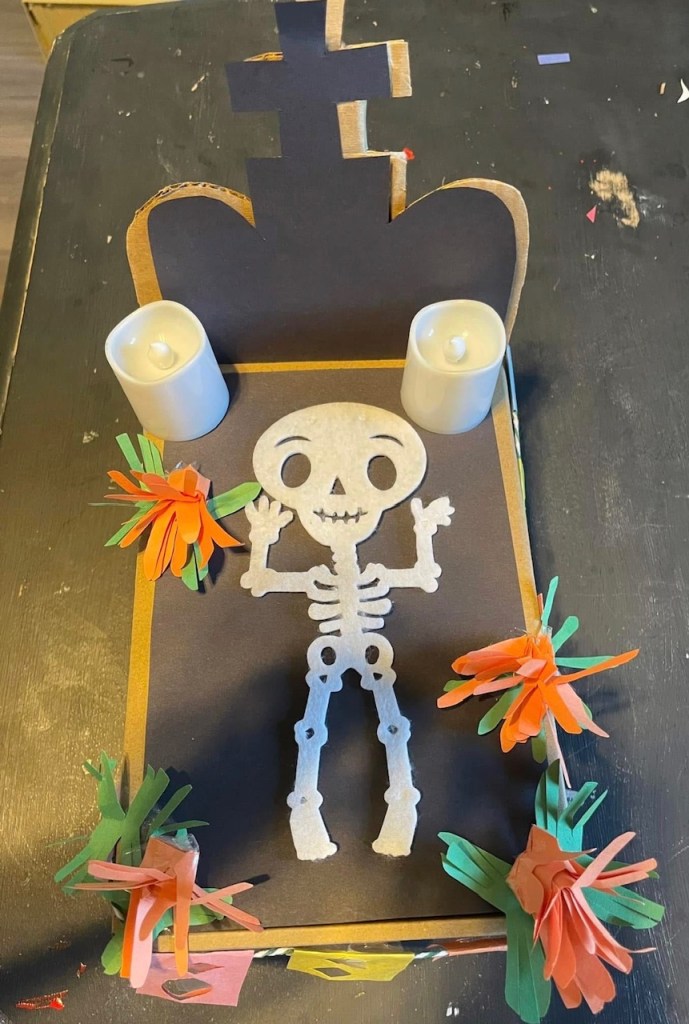
Crafting identity: Día de los Muertos traditions offer children a creative way to explore their culture, family, strengths, and the stories that make them who they are.


